Global Citizenship Education in national curricula.
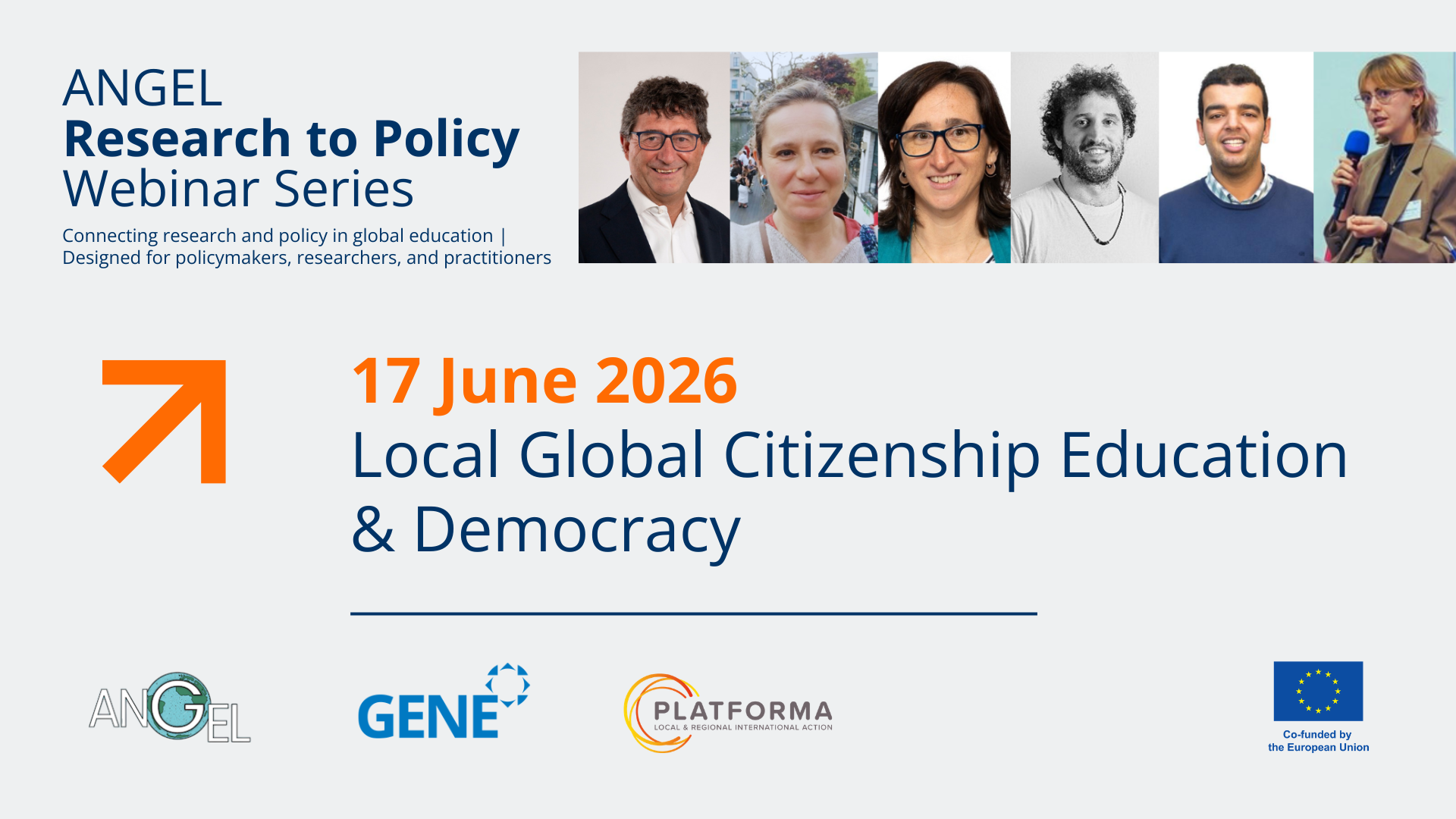
This webinar, co-developed with the Global Education Time (GET) project, is the third in the new ANGEL Research to Policy Webinar Series


This webinar, co-developed with PLATFORMA, will explore how local policies and community-based Global Citizenship Education strengthen civic engagement, counter disinformation, and connect local realities to global challenges. By showcasing inspiring local practices from Europe, we will highlight how local and regional governments, together with local stakeholders, can lay the foundations for democratic resilience by fostering solidarity, intercultural dialogue, and inclusive participation.
It will be hosted on Zoom on June 17, at 13:00 (UK).
This event is the second event in the new ANGEL Research to Policy Webinar Series, which focuses on key issues identified by policymakers through GENE’s policy learning processes — offering insights, evidence, and dialogue grounded in real policy needs.
Trust in democracy is in decline across the globe. Rising inequalities, disinformation, polarisation, democratic backsliding, and unresolved historical injustices are eroding citizens’ confidence in democratic institutions. Yet, this crisis is not abstract; it is experienced most directly at the local level, in communities where people live, learn, and engage with governance.
This webinar will examine the role of local Global Citizenship Education (GCE) in addressing these challenges and restoring trust in democracy. Local GCE empowers people to become active co-creators of democratic life, building inclusive spaces for dialogue, critical thinking, and collective action. By connecting local experiences with global realities (from climate change to migration, from colonial legacies to digital disinformation) GCE nurtures solidarity and a sense of shared responsibility while countering polarisation, disinformation and hate discourses.
The discussion will showcase inspiring practices from European local and regional governments. Participants will gain insights into how local and regional governments, together with educators, civil society organisations and other local stakeholders, can mobilise GCE to promote inclusive participation, empower marginalised voices, enhance intercultural dialogue, and strengthen the bonds between citizens and democratic institutions.
PLATFORMA is the pan-European coalition of towns and regions – and their national, EU and global associations – active in city-to-city and region-to-region development cooperation. They act as a hub of expertise on European local and regional governments’ international action, and aim at boosting European local and regional governments’ contribution to EU development cooperation policies and international frameworks. Visit their website.
This annual series, hosted by ANGEL but created in partnership with Global Education Network Europe (GENE), is designed with policymakers in mind, creating a shared space to bridge silos, connect researchers with policymakers, and support better, research-informed policymaking in global education.
This event is hosted by the Academic Network for Global Education & Learning, the international forum examining the research on, and practice of Global Education & Learning.
We are looking for ideas from the ANGEL community for events during the 2025/26 academic year.
Carousel image attribution: "panoramio (2525)" by William “Patrick” Ma. Under CC 3.0
The establishment of this network and website has been made possible with funding support from the European Commission.
The activities and publications of the network are the responsibilities of the organisers, the Development Education Research Centre, and can in no way be seen as reflecting the views of the European Commission.