
Global Education and Learning in non-formal education settings.
Three short research presentations that examine GEL in varied non-formal settings.


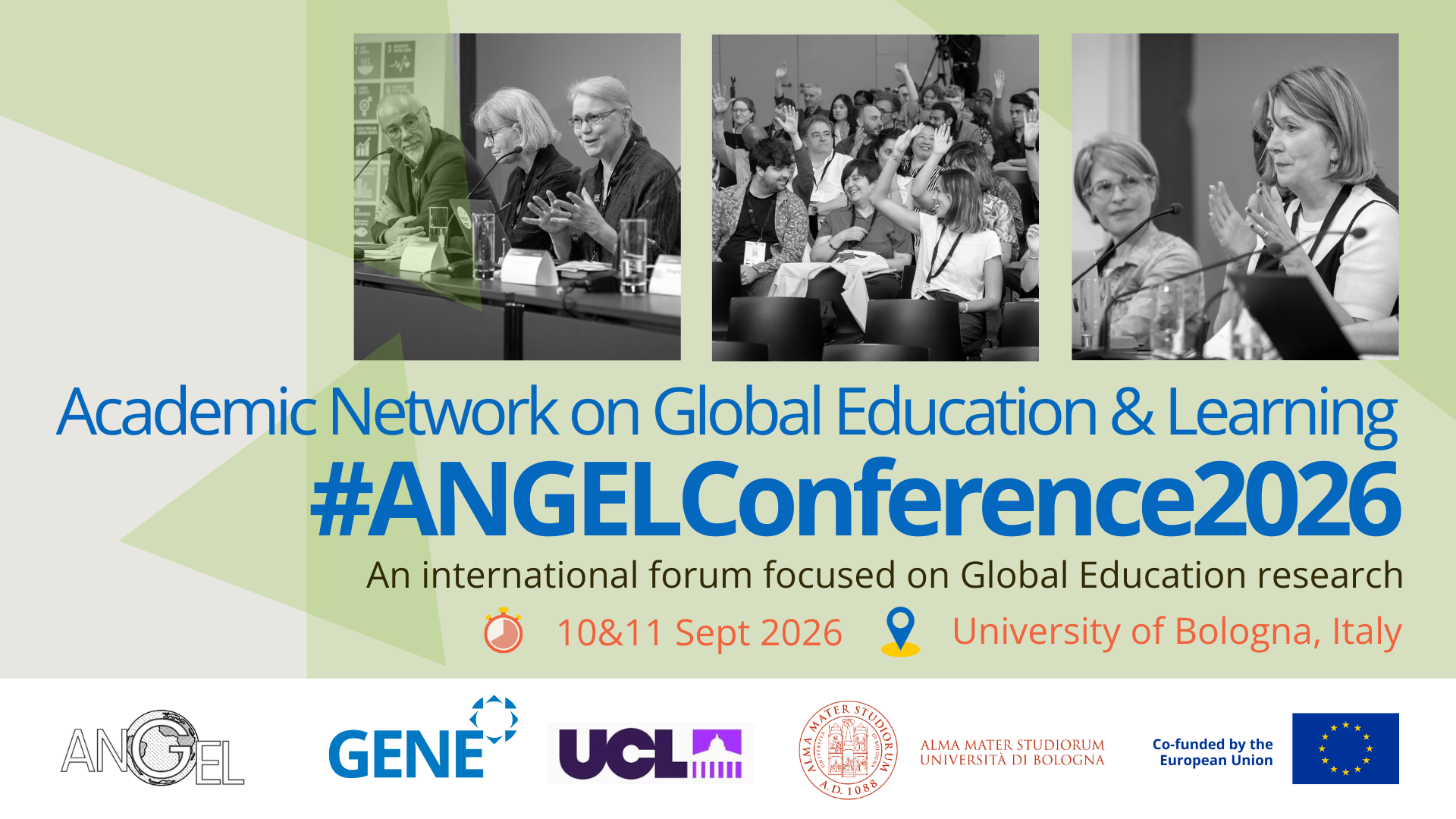
The Academic Network for Global Education & Learning (ANGEL), in partnership with The University of Bologna, and with the cooperation of Global Education Network Europe and UCL Institute of Education, will be organising its sixth international conference on 10 & 11th September 2026, at The University of Bologna, Italy.
We are issuing an open call for proposals for a range of sessions and presentations at this exciting event, with a deadline of 27 April 2026. All successful applicants will of course be guaranteed a place at the event.
Offering a mixture of plenary sessions, workshops, symposia, paper presentations, and networking, the event aims to bring together academics, researchers, policy-makers, and practitioner-researchers from around the world for two exciting face-to-face days of sessions covering research relevant to Development Education, Global Citizenship Education, Human Rights Education, Education for Sustainable Development, Education for Peace, and Intercultural Education.
At a time of profound uncertainty, global education and learning stands at a critical crossroads. Across research, policy, and practice, there is an urgent need to recognise, document, research, re-invigorate and continue to reimagine the role of global education as a force for peace, justice, and collective action in the face of war, environmental crises, deepening inequalities, and the rise of nationalism and authoritarianism.
This conference responds to this moment by centring questions of power, voice, and purpose: whose knowledge is valued, whose futures are imagined, and how can global learning move beyond rhetoric towards meaningful and transformative practice? The conference will be a space for ANGEL members to share and critically discuss relevant research, fostering exchange across contexts and disciplines and strengthening the collective impact of research on global education theory, policy, and practice. It will be guided by the conceptual framework and commitments of the 'Dublin Declaration', formally known as The European Declaration on Global Education to 2050.
Building on discussions at ANGEL's Berlin conference 2025, a set of key themes for a future ANGEL conference has emerged, and the Bologna conference is framed around these priorities. Recurring across these debates is the call to break down disciplinary silos and to strengthen partnerships between research, policy, practice, and communities. ANGEL members emphasise the importance of decolonial, feminist, indigenous, and Global South perspectives, alongside critical examinations of neoliberalism, colonial legacies, and contemporary geopolitical dynamics for research in global education. Equally prominent is the challenge of translating research and evidence into educational action — through innovative methodologies, robust evaluation, storytelling, and pedagogies that embrace hope, discomfort, and disruption.
At the same time, rapid technological change, including digitalisation and artificial intelligence, raises pressing ethical, pedagogical, and political questions for global education. Understanding how these developments intersect with global justice, environmental sustainability, and equitable futures represents a defining challenge for the field.
This conference invites researchers, educators, practitioners, and policymakers to submit contributions that critically and rigorously engage with these themes. By foregrounding sound research and critical scholarship, the conference aims to reassert global education and learning as a vital space for dialogue, critical inquiry, dissent, and solidarity in shaping just, peaceful, and sustainable global futures.
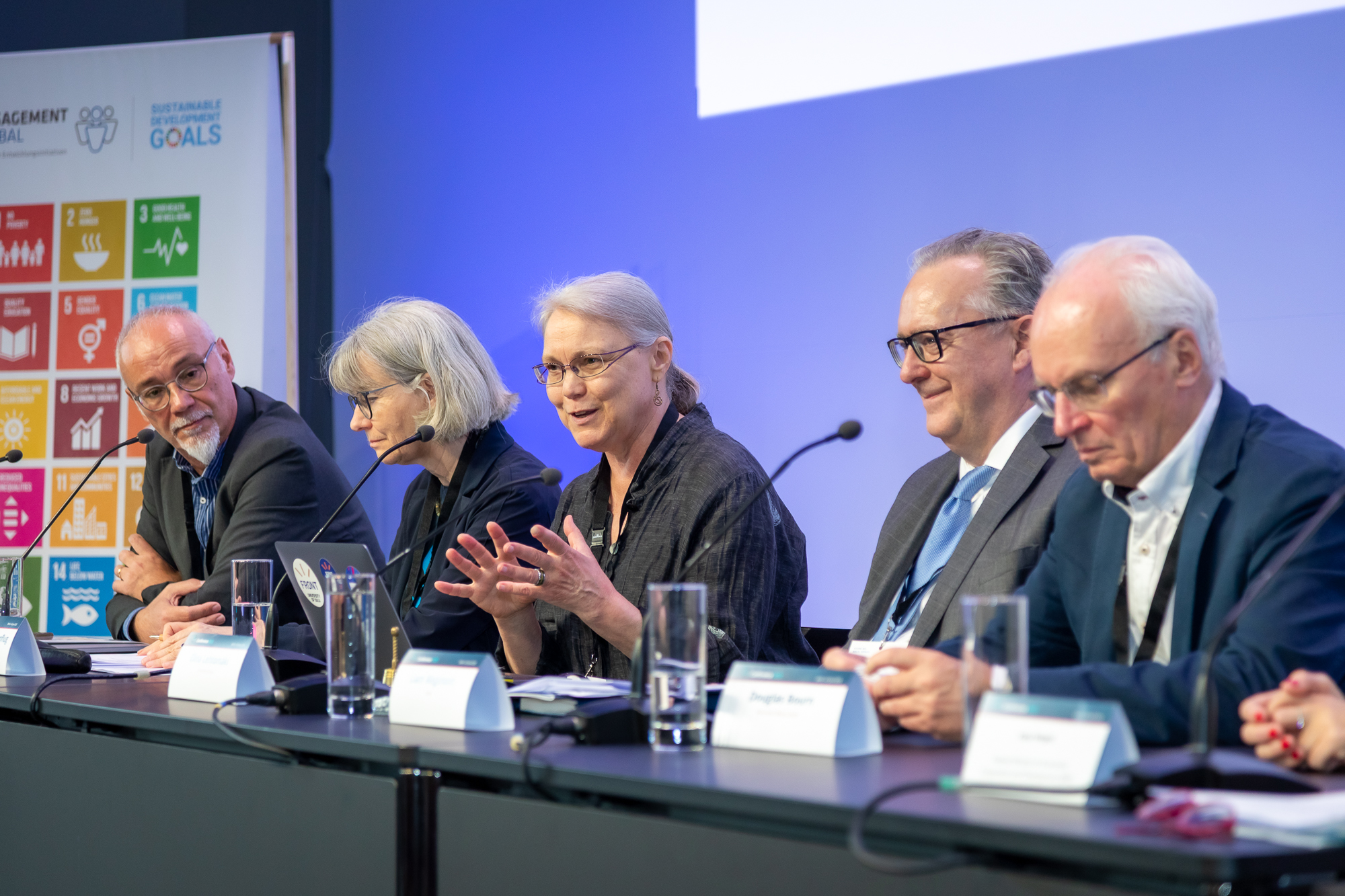
ANGEL Conference 2025. Photo: Concept Photography Berlin.
The 2026 conference carries a registration fee. The early bird costs will be as below. Booking will open in March. Find out about ANGEL membership here.
ANGEL define an Early Career Researcher as a current PhD student or completed in the last 6 years.
We are calling for submission of proposals from academics, policymakers, and practitioners, for a wide range of sessions, including paper presentation sessions, symposia, workshops and other special sessions across the two days. We are particularly keen to hear proposals for sessions that would maximise the potential of a face-to-face meeting, and ones that provide bridging points between the academic community and policy and practitioner networks.
Please note that presentations and sessions will be face-to-face. Submissions and presentations must be in English.
Participation can take the following forms:
Your submission should demonstrate a connection or relevance to the conference concept, as listed above, and / or a connection with global education and learning, as defined in the ‘Dublin Declaration’. Please note that we will be prioritising presentations that relate to research projects that are complete over those which are under way.
Abstracts for paper presentations are limited to 200 words (350 words for symposia and workshops etc) and must be submitted by the end of 27 April 2026. Your submission will be double blind peer reviewed, and you will receive a decision about whether we can include your presentation or symposium by 4 May at the latest.
To find further details, and to submit your information, visit our online form via the button below.
ANGEL Conference 2025. Photo: Concept Photography Berlin.
The conference this year has no dedicated early career researcher session. Though those who fit this category (current PhD student or completed in the last 6 years) are strongly encouraged to submit proposals, and they will be assessed via the same process as all other submissions. The events aims to support and nurture Early Career Researchers, including via a smaller registration fee.
Please indicate during the application process whether you are interested in your research being included in any publications documenting the event.
We are calling on members to help us spread the word about this important event for the ANGEL project. Please find below links to resources that you can use to promote the event and the call for submissions.
Any enquiries should be sent to: info@angel-network.net
The involvement of DERC and GENE in this event, along with the other activities of the ANGEL network, is co-funded by the European Union. The establishment of this network and website has been made possible with funding support from the European Commission. The activities and publications of the network are the responsibilities of the organisers, the Development Education Research Centre, and can in no way be seen as reflecting the views of the European Commission.
You can now submit proposals for a range of sessions and presentations at this year's major ANGEL event, with a deadline of 13 April 2026.

Zeitschrift für internationale Bildungsforschung und Entwicklungspädagogik
Carousel image attribution: "panoramio (2525)" by William “Patrick” Ma. Under CC 3.0
The establishment of this network and website has been made possible with funding support from the European Commission.
The activities and publications of the network are the responsibilities of the organisers, the Development Education Research Centre, and can in no way be seen as reflecting the views of the European Commission.